Table of contents
Is it really the must-see checklist that makes a trip unforgettable, or the moments you never planned for? In an era where social media itineraries can turn entire neighborhoods into queues, travelers are quietly chasing the opposite: surprise, detours, and encounters that feel unrepeatable. Tourism researchers have long noted that satisfaction often rises with perceived “authenticity” and personal meaning, yet those are precisely the things hardest to engineer. So where does serendipity fit in, and can you invite it without scripting it away?
Why surprises stick longer than landmarks
Ask someone about a “great trip” a year later, and the answer rarely begins with opening hours. It starts with a missed train that led to a seaside café, a conversation on a park bench, a street musician in a back lane, and there is a reason memory works this way. Cognitive psychologists have shown that novelty and emotional intensity strengthen recall; experiences that break a pattern tend to be encoded more deeply than routine ones, and travel is one of the few times adults willingly seek that disruption. Even the tourism industry’s own metrics hint at it: repeat visitors are often driven less by ticking off icons, more by the desire to re-enter a feeling, a pace, or a particular corner that surprised them the first time.
Data backs the intuition that “unexpected” can be a measurable driver of happiness. Studies in consumer behavior repeatedly find that experiential purchases deliver more enduring satisfaction than material ones, largely because experiences are richer in social connection and identity; within experiences, those perceived as unique or story-worthy become part of how people describe themselves. That is why a small, unplanned detail can eclipse the main attraction in a traveler’s personal narrative, and it is also why over-optimization can backfire. If every hour is pre-booked, the trip becomes a logistical performance, and when something inevitably shifts, stress replaces curiosity.
None of this means planning is useless. It means planning has a different job than many travelers give it: not to control the trip, but to protect the conditions in which good accidents can happen. A well-chosen base, realistic transit time, and a few “anchors” you truly care about can create psychological safety, and that safety makes it easier to say yes to the unexpected. The secret ingredient is not chaos; it is slack, and modern travel often strips slack away.
Over-planning is killing the travel buzz
It looks efficient, until it doesn’t. The rise of algorithmic recommendations has made it easy to assemble a “perfect” route, but it also funnels millions of people toward the same viewpoints, cafés, and photo spots, and this is not just anecdotal. Cities such as Amsterdam, Barcelona, and Venice have each, in different ways, moved to manage overtourism pressures in recent years, from regulating short-term rentals to limiting group sizes or imposing visitor rules, precisely because concentrated demand can overwhelm daily life. When a destination becomes a sequence of viral pins, the traveler’s experience narrows, and residents’ tolerance thins.
At the individual level, tightly scheduled travel is associated with decision fatigue and a phenomenon researchers call the “planning fallacy,” our tendency to underestimate how long tasks take. Add security lines, delays, weather, and the simple human need to pause, and a packed itinerary becomes a stress test. The irony is that the more “productive” the plan, the less room there is for the very things people claim to want: spontaneity, wandering, and the sense that you discovered something yourself. Even dining becomes transactional when reservations are the only option, and the evening’s mood is dictated by the clock.
The cultural cost is more subtle. Over-planning can turn a place into a backdrop rather than a relationship, and that matters because attachment to place is built through small, repeated exposures: a morning coffee routine, a familiar corner store, the walk back at dusk. Those are hard to schedule, yet they are often what differentiates a trip that felt “nice” from one that felt like it changed your perspective. If the buzz of travel comes from stepping outside your usual patterns, then reproducing someone else’s pattern minute by minute is a strange way to chase it.
Designing for serendipity, without faking it
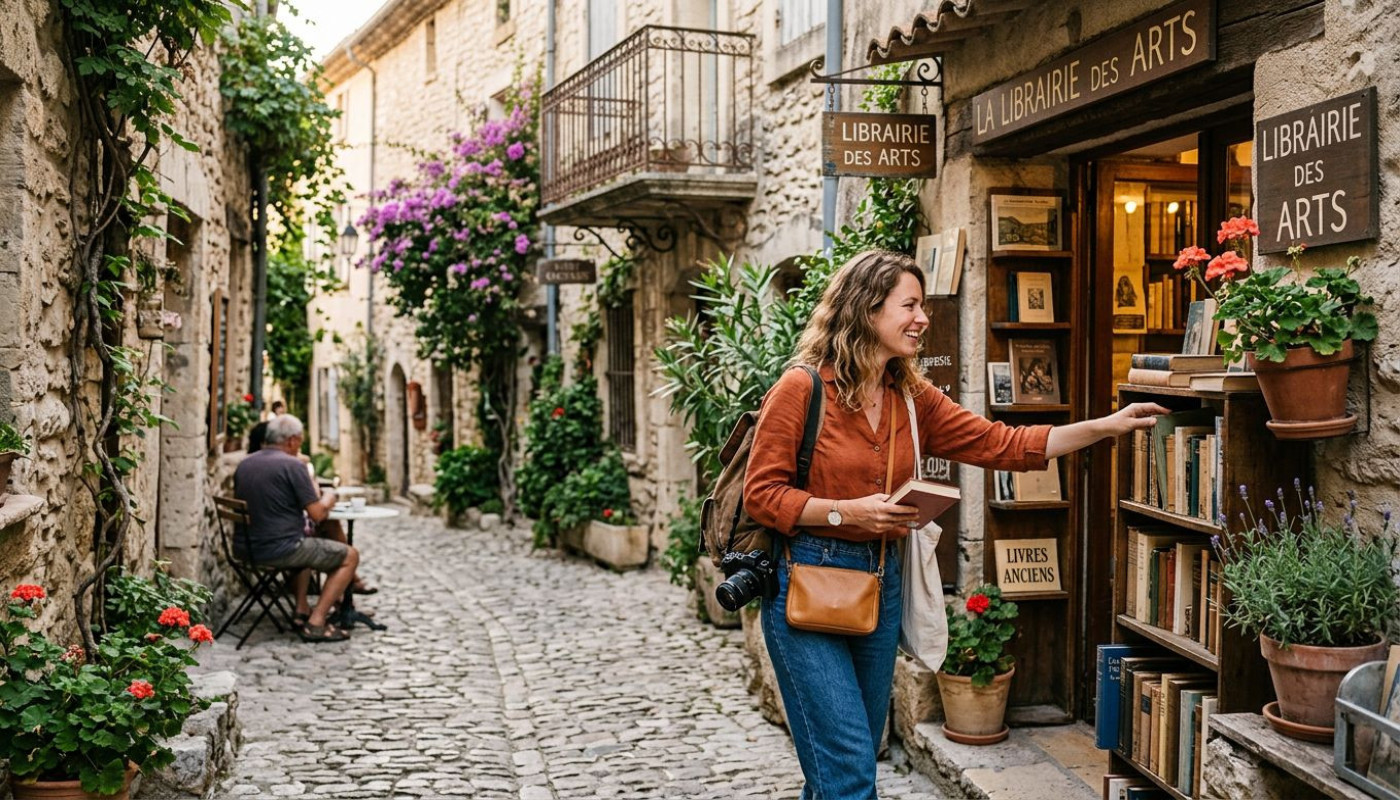
You cannot manufacture chance, but you can make it more likely. Start with geography: staying in a walkable area increases the number of micro-decisions you can make on foot, and each micro-decision is an opening for surprise. Public transport does something similar; it places you among locals, signage, and daily rhythms, and it increases the odds of the “happy misread” that leads to a new district. The trick is to build a trip around a few non-negotiables, then deliberately leave blocks of time unassigned, not as an afterthought, but as a core feature.
Serendipity also responds to social behavior. Travelers who ask questions tend to receive stories in return, and those stories are often better than any guidebook line because they come with context: where to stand when the light hits, which bakery sells out by noon, which neighborhood is lively but still respectful. Even simple practices help, such as returning to the same market twice, or taking one guided tour early to get bearings, then using the rest of the trip to roam. Serendipity is not only about stumbling; it is also about being receptive, and receptivity rises when you are not rushing.
Digital tools can support this, if you use them differently. Instead of a rigid route, keep a short list of “if nearby” spots, and treat them as options, not obligations. Use maps to save parks, bookstores, galleries, and viewpoints scattered across the city, then let your feet choose the order. If you want a practical starting point for shaping a flexible itinerary, browsing resources like https://www.chester-trip.com can help you identify areas, day-trip ideas, and timing considerations, and then you can deliberately leave breathing space for the moments no website can predict. The goal is not to avoid planning; it is to plan for freedom.
When detours become the destination
Sometimes the detour is not a footnote, it is the trip’s emotional center. Think of the traveler who came for a museum and fell for a neighborhood’s evening energy, or the family that remembers a rainy afternoon in a tiny cinema more vividly than the famous cathedral. These moments work because they carry a sense of personal authorship, and authorship is powerful: it turns travel from consumption into participation. In that sense, serendipity is not merely luck, it is a way of giving yourself permission to be moved by what you did not anticipate.
Destinations, too, are learning to respond. As tourism boards promote dispersal beyond the “top 10,” smaller towns and secondary cities are being reframed as places where travelers can slow down and explore without the pressure of the main stage. The economic logic is clear, spreading spending reduces pressure on hotspots, but the experiential logic matters just as much: quieter places often offer more room for wandering and conversation, and those conditions nurture surprise. Even within major cities, choosing off-peak travel or venturing beyond the postcard center can restore the feeling of discovery.
The key is to recognize that memorable travel is rarely a straight line. It is a sequence of small choices that accumulate into a story, and the best stories leave space for interruption. If serendipity is a secret ingredient, it is because it restores what travel promises in the first place: the chance to encounter a world that does not bend to your routine, and to return home with a memory you could not have ordered in advance.
How to budget for the unexpected
Set aside time and money for detours: a free afternoon, a flexible rail ticket, and a small “yes fund” for a concert, a second museum, or a taxi when you are tired. Book only the truly scarce items early, compare cancellation terms, and check local passes or regional discounts; the best surprise is the one you can afford to follow.
On the same subject